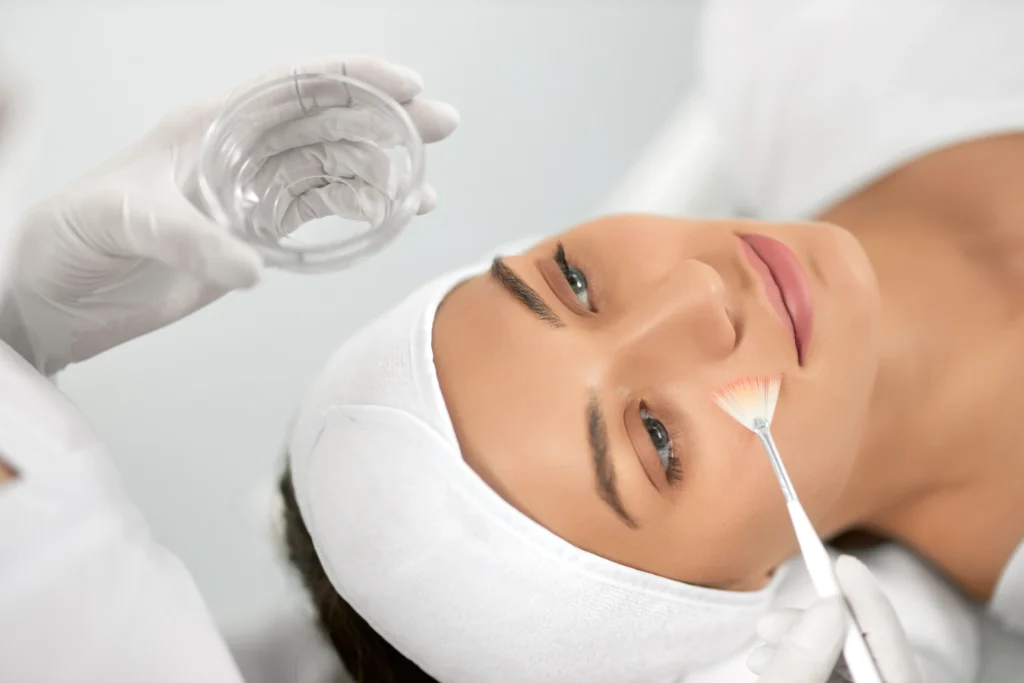
A chemical peel does its work through controlled exfoliation. It removes damaged surface layers to trigger cell turnover and reveal smoother, brighter skin underneath. The result you get depends heavily on what you do during recovery, so chemical peel aftercare is not an afterthought. It is half the treatment.
This guide walks you through a typical recovery timeline from treatment day through Day 14, what is normal at each stage, what to avoid, and when to call your provider. One important note first: your exact healing time depends on the depth of your peel, and your provider’s specific instructions always come before any general guide, including this one.
How Peel Depth Changes Your Recovery
Not all peels heal on the same schedule, so set your expectations by depth.
- Superficial peel: The most common type, using mild acids like glycolic acid, lactic acid, or salicylic acid. Expect light flaking and dryness, with most visible peeling finished within about a week and minimal downtime.
- Medium-depth peel: Reaches deeper, so you can expect more redness, some swelling, and more noticeable peeling. Healing time usually runs the full one to two weeks.
- Deep peel: Used less often and reserved for specific concerns. Recovery is longer and more involved, and your provider will give you a detailed, customized plan.
At You But Younger in Saginaw, the peel strength is matched to your skin during your consultation, so ask which category yours falls into and adjust the timeline below accordingly.
Day 0: Treatment Day
Right after your peel, mild redness, tightness, stinging, and warmth are normal as inflammation settles. Your skin barrier has just been disrupted on purpose, so it needs calm, simple care.
- Leave your skin alone. No scrubbing, no cleansing brush, no washcloth, no makeup for the rest of the day.
- If you cleanse at all, use a soap-free, fragrance-free gentle cleanser and lukewarm water, patting dry rather than rubbing.
- Apply a bland, fragrance-free moisturizer with barrier-supporting ingredients like ceramides, glycerin, hyaluronic acid, or panthenol.
- Avoid sun exposure entirely today, and start broad-spectrum sunscreen tomorrow if your provider clears it.
- Skip all active ingredients: retinoids, tretinoin, adapalene, benzoyl peroxide, AHAs, BHAs, and vitamin C (ascorbic acid) all stay in the cabinet.
Days 1 to 2: Tight, Dry, and a Little Red
Your skin will likely feel tight and dry, look pink or red, and may be slightly swollen, especially after a medium-depth peel. This is the inflammation and early barrier repair phase.
Keep your routine boring on purpose. Cleanse gently once or twice a day, moisturize whenever your skin feels tight, and apply a broad-spectrum mineral sunscreen of SPF 30 or higher every morning. Mineral formulas with zinc oxide or titanium dioxide tend to sit better on healing skin than chemical filters. If a spot feels especially dry or raw, a thin layer of an occlusive ointment such as petrolatum can lock in moisture. Mild itching can happen, but do not scratch.
Days 3 to 5: The Peeling Phase
This is the stage everyone asks about. Flaking and peeling usually begin around Day 3, sometimes a little sooner or later depending on your peel. Skin may look dry, crackly, or darker right before it sheds.
The single most important rule: do not pick, pull, or exfoliate the peeling skin. Letting it flake off on its own protects the fresh skin underneath and helps you avoid scarring and post-inflammatory hyperpigmentation. Pulling skin early is the most common cause of an uneven, blotchy result.
What to do instead during the peeling phase:
- Keep skin consistently moisturized to ease tightness and reduce the urge to pick.
- Continue gentle cleansing and daily broad-spectrum sunscreen without fail.
- Resist any exfoliating scrub, acid, or tool. Your skin is exfoliating itself right now.
Days 6 to 7: Fresh Skin Appears
For most superficial peels, the peeling winds down by the end of the first week and you are left with smoother, brighter, more even-looking skin. Some residual pinkness or dryness can linger. Medium-depth peels may still be finishing their peel and need a few more days.
Keep protecting the new skin. It is young and especially vulnerable to UV radiation, so sunscreen is non-negotiable, and a hat helps if you are outdoors around Saginaw.
Days 8 to 14: Barrier Recovery and Reintroducing Actives
By the second week, your skin barrier is largely repaired, though deeper peels are still maturing. This is usually when you can begin easing back into your regular routine, but only with your provider’s go-ahead and one product at a time.
Reintroduce stronger actives gradually. Retinoids like tretinoin and adapalene, benzoyl peroxide, AHAs, BHAs, and vitamin C are typically the last to come back, often once skin is calm and no longer flaking. Adding them too soon undoes your progress and irritates fresh skin. Keep using daily broad-spectrum sunscreen well beyond Day 14, since sun protection is what locks in your result and prevents new pigment problems.
What to Avoid Throughout Recovery
A few things can derail healing no matter which day you are on. Until your provider says your skin has recovered:
- Sun exposure. Unprotected sun is the biggest risk after a peel. It can cause post-inflammatory hyperpigmentation, worsen melasma, and damage new skin. Daily broad-spectrum SPF 30 or higher is essential.
- Heat and sweat. Skip hot showers, saunas, steam rooms, hot tubs, hot yoga, and intense workouts for at least the first few days, since heat and sweating increase inflammation and irritation. Avoid swimming pools too, because chlorine is harsh on healing skin.
- Picking and over-cleansing. No scrubs, no cleansing brushes, no rough washcloths, and no peeling the flakes.
- Harsh actives and makeup too soon. Hold off on retinoids, benzoyl peroxide, AHAs, BHAs, and vitamin C, and keep makeup off until your provider says it is safe, usually after the first day or two for a superficial peel.
Watch for Cold Sores
If you have a history of cold sores, a peel can sometimes trigger a flare because of the skin trauma. Tell your provider beforehand, since they may prescribe an antiviral medication to take around your treatment as a precaution.
When to Call Your Provider
Most redness, flaking, dryness, mild swelling, stinging, and itching are normal parts of healing. Contact your provider promptly if you notice signs that go beyond expected recovery:
- Signs of infection such as spreading redness, warmth, pus, or a fever.
- Blistering, unexpected crusting, or open sores beyond what your provider described.
- Severe or worsening swelling, intense pain, or a cold sore outbreak.
For trusted general guidance on skin care and recovery, the American Academy of Dermatology (AAD) is a reliable resource, but your own provider knows your peel and your skin best. When in doubt, call.
Heal Well, Glow Longer in Saginaw
Good aftercare is the difference between an average peel and a great one. Protect your skin, be patient through the peeling phase, and let the new layer come in on its own schedule.
If you are considering a peel or have questions about your recovery, the team at You But Younger is here to help. Christine Henderson, a board-certified nurse practitioner, tailors each peel and aftercare plan to your skin. Learn more about chemical peels in Saginaw, pair your results with a customized facial, or contact our team to book a free consultation.